Booom! Educators

Interesting Facts for Educators!

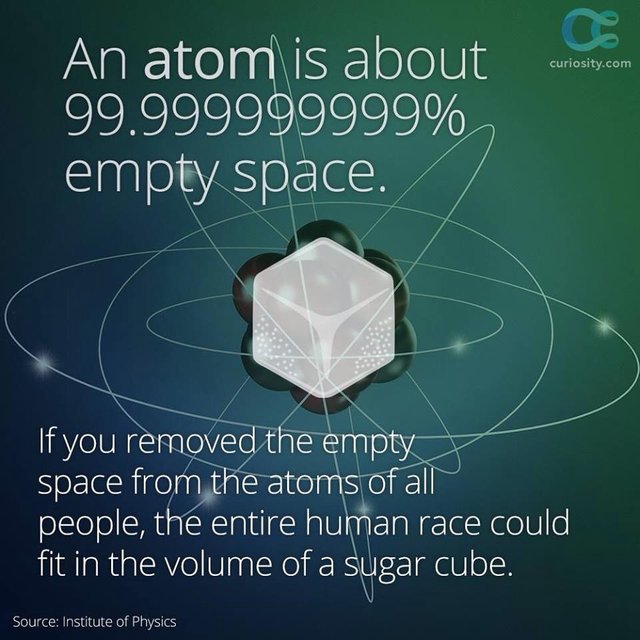
If you removed all the empty space in our atoms, the human race could fit inside a single sugar cube

The atoms that make up the world around us seem solid but are in fact over 99.99999 per cent empty space. An atom consists of a tiny, dense nucleus surrounded by a cloud of electrons, spread over a proportionately vast area. This astonishing discovery was made in 1909 at Manchester University by Ernest Rutherford.
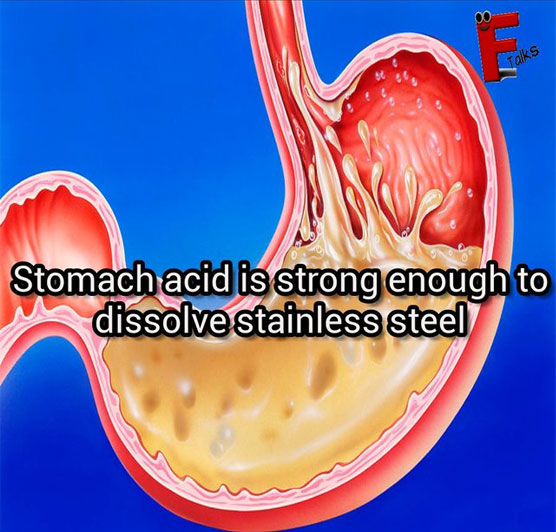
Stomach acid is strong enough to dissolve stainless steel

Your stomach digests food thanks to highly corrosive hydrochloric acid with a pH of 2 to 3. This acid also attacks your stomach lining, which protects itself by secreting an alkali bicarbonate solution. The lining still needs to be replaced continually, and it entirely renews itself every four days.

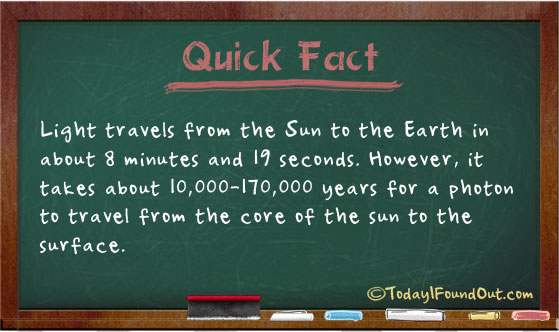
It takes 8 minutes, 19 seconds for light to travel from the Sun to the Earth

In space, light travels at 300,000 kilometres (186,000 miles) per second. Even at this breakneck speed, covering the 150 million odd kilometres (93 million miles) between us and the Sun takes considerable time. And eight minutes is still very little compared to the five and a half hours it takes for the Sun’s light to reach Pluto.

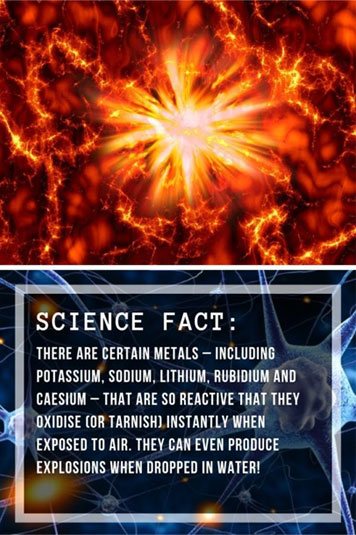
Some metals are so reactive that they explode on contact with water

Certain metals — including potassium, sodium, lithium, rubidium and caesium — oxidize instantly when exposed to air and can produce explosions when dropped in water. Alkali metals have only one electron on their outer shell, making them ultra-keen to bond with other elements.

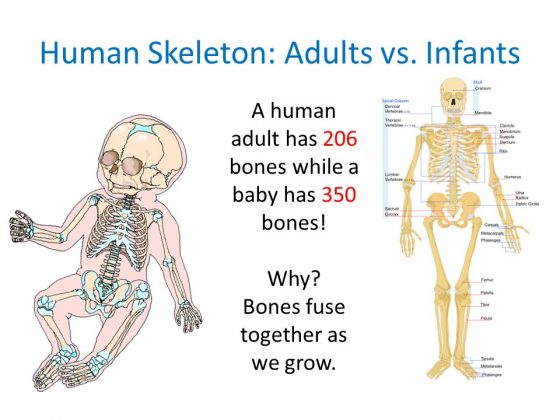
Babies have around 100 more bones than adults

Babies have about 300 bones at birth, with cartilage between many of them. This extra flexibility helps them pass through the birth canal and also allows for rapid growth. With age, many of the bones fuse, leaving 206 bones that make up an average adult skeleton.

Why does your temperature fluctuate when you have a fever?

When you have an infection, your body produces white blood cells that affect your hypothalamus. Blood vessels tighten, skin cools, and muscles shiver — producing more heat. After the infection is fought off, vessels open and you sweat, cooling you down again.